
Common causes and what to do
If you’ve ever noticed pink in the sink when you brush your teeth, you’re not alone. It’s a very common concern.
Healthy gums typically should not bleed when you brush or floss.
Do your eyes bleed when you rub them? Of course not. When your gums bleed, it usually means something is off. Most often, it’s plaque building up along the gumline. Sometimes, it’s simply a matter of brushing or flossing technique.
Understanding the cause is the first step toward getting your gums back to health.
Quick Answer:
Bleeding gums when brushing your teeth are most often caused by gingivitis, the early stage of gum disease.
Is It Normal for Your Gums to Bleed When You Brush?
No. Healthy gums generally do not bleed during brushing or flossing.
If your gums are bleeding, it’s usually a sign of inflammation. The most common reason is gingivitis, which develops when plaque is not fully removed from the gumline.
Gingivitis develops when plaque builds up along the gumline and irritates the surrounding gum tissue.
Other causes can include:
- Brushing too aggressively
- Tartar buildup
- Flossing too forcefully
- Hormonal changes
- Certain medications
- Nutritional deficiencies
In many cases, bleeding improves once the cause is identified and corrected.
“Healthy gums usually do not bleed during normal brushing or flossing. Bleeding is often an early sign that your gums need attention.”
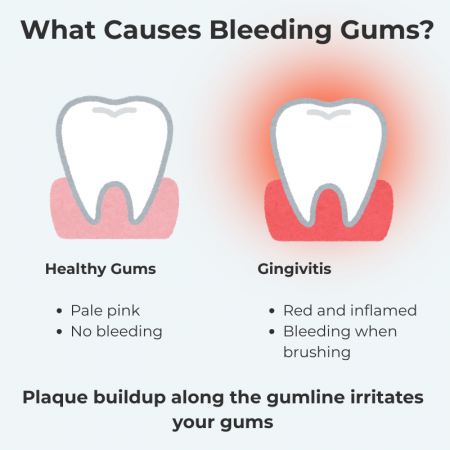
The Most Common Cause: Gingivitis
The most common reason your gums bleed when brushing is gingivitis, the earliest stage of gum disease.
Gingivitis starts when plaque, a sticky film of bacteria, builds up along your gumline. If it is not removed regularly, it can irritate your gums. Over time, plaque can harden into tartar, which makes things worse.
When your gums are inflamed, you may notice:
- Redness along the gumline
- Swollen or tender gums
- Bleeding when brushing or flossing
The good news is that gingivitis is usually reversible with better oral hygiene and regular dental cleanings.
If it is not treated, it can progress to periodontitis, a more advanced form of gum disease.
Another Cause: Brushing Too Hard
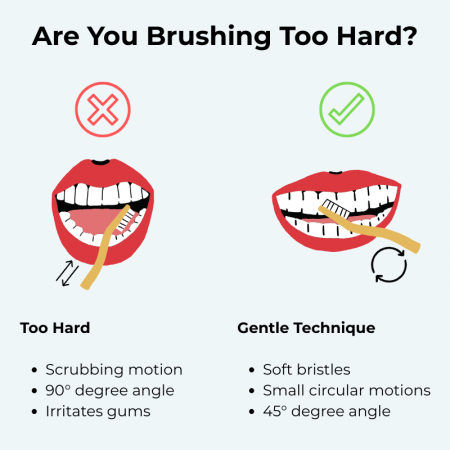
It’s easy to think that brushing harder means cleaner teeth. In reality, brushing too aggressively can irritate your gums and make them bleed.
Brushing your teeth should not feel like scrubbing a stubborn stain.
Over time, brushing too hard can lead to gum recession, which can make your teeth more sensitive.
Signs you may be brushing too hard include:
- Toothbrush bristles that wear out quickly
- Gum soreness after brushing
- Sensitivity near the gumline
Using a soft bristled toothbrush and gentle circular motions is usually the most effective way to clean your teeth.
If you use an electric toothbrush, let it do the work. You don’t need to press down.
“A gentle brushing technique with a soft-bristle toothbrush is one of the best ways to protect both your teeth and your gums.”
Or, When You First Start Flossing
If you’ve recently started flossing more regularly and noticed some bleeding, this can happen.
Flossing removes plaque and bacteria from areas your toothbrush cannot reach. If those areas have been neglected, your gums may react at first.
In many cases, bleeding improves within one to two weeks as your gums become healthier.
Technique matters. Floss should be guided gently between your teeth, not snapped down.
With consistency and a gentle approach, your gums usually improve.
Patient Tip:
If your gums bleed when you floss, don’t stop! It can be a sign you need to floss more consistently, not less.
And, if You Have Plaque & Tartar Buildup
Even with regular brushing, plaque can sometimes harden into tartar.
Once tartar forms, it cannot be removed with brushing alone.
Tartar buildup along the gumline can irritate your gums and lead to bleeding.
Professional dental cleanings remove plaque and tartar that can cause gum inflammation.
Most people benefit from cleanings every six months.
When Should You See a Dentist?
Occasional bleeding may not always be serious. However, it’s a good idea to have your gums checked if you notice:
- Bleeding that happens often
- Gums that are swollen or red
- Bleeding that lasts more than one to two weeks
- Persistent bad breath
- Gums that appear to be pulling away from your teeth
Catching gum issues early makes them much easier to treat.
For New Yorkers Looking for a Dentist They Can Trust:
If you are in the New York City area and looking for a dentist who takes the time to listen, explain, and treat you like family, my team and I would be honored to meet you.
Visit us at our New York City dental office in Midtown Manhattan for an experience built on clarity, compassion, and genuine connection. Whether you have questions about gum health, dental implants, cosmetic care, or anything else, you will receive straight answers and the time you deserve.
You may have just found your new dental home.
Frequently Asked Questions About Bleeding Gums
1. Why do my gums bleed when I brush my teeth?
Bleeding gums are most often caused by gingivitis, which happens when plaque builds up along the gumline.
2. Is it normal for gums to bleed when brushing?
No. Healthy gums should not bleed during brushing or flossing.
3. Can brushing too hard cause bleeding gums?
Yes. Brushing too aggressively can irritate your gums and lead to bleeding.
4. Why do my gums bleed when I floss?
If you are new to flossing, your gums may bleed at first. This usually improves with consistent, gentle flossing.
5. How can I stop my gums from bleeding?
Improving your brushing and flossing habits and getting regular dental cleanings can help restore healthy gums.
6. When should I see a dentist for bleeding gums?
If bleeding continues for more than one to two weeks or happens frequently, it’s best to have your gums evaluated.
About the Author
Dr. Michael Sinkin is a general and implant dentist in New York City with over 40 years in practice. He holds a Master of General Dentistry, a credential earned by fewer than 6 percent of dentists in the United States. He also serves as a Surgical Director at NYU College of Dentistry’s Continuing Education Implant Program.