

Dental Bonding in Manhattan
What Does Dental Bonding Include?
Dental bonding uses a tooth-colored composite resin, sculpted directly onto your tooth to repair chips, close small gaps, or cover discoloration. Dr. Sinkin applies, shapes, and hardens the material with a curing light, then polishes it to match your natural enamel. Most bonding is completed in a single visit, with results lasting five to ten years.
You do not need a dental emergency to end up in my chair for bonding. Most of the time it is something small. A chipped edge from biting into ice. A gap between your front teeth that has bothered you since your senior photos resurfaced somewhere. A spot of discoloration that whitening never quite touched.
None of it requires a full smile makeover, and I would rather tell you that upfront than build a bigger treatment plan than the problem calls for.
I have been doing this kind of work in Midtown Manhattan for a long time, and bonding is one of the few procedures where I can fix the problem, show you the result, and have you back at your desk the same afternoon. No lab, no waiting weeks for anything to come back.
Bonding also rarely requires anesthesia. Unless we are covering a cavity or working close to a nerve, most patients skip getting numbed entirely, which means you can eat lunch on your way back to the office instead of doing the two-hour, half-your-face-is-asleep routine that makes people dread other appointments.
The Visit That Fixes It Without a Production
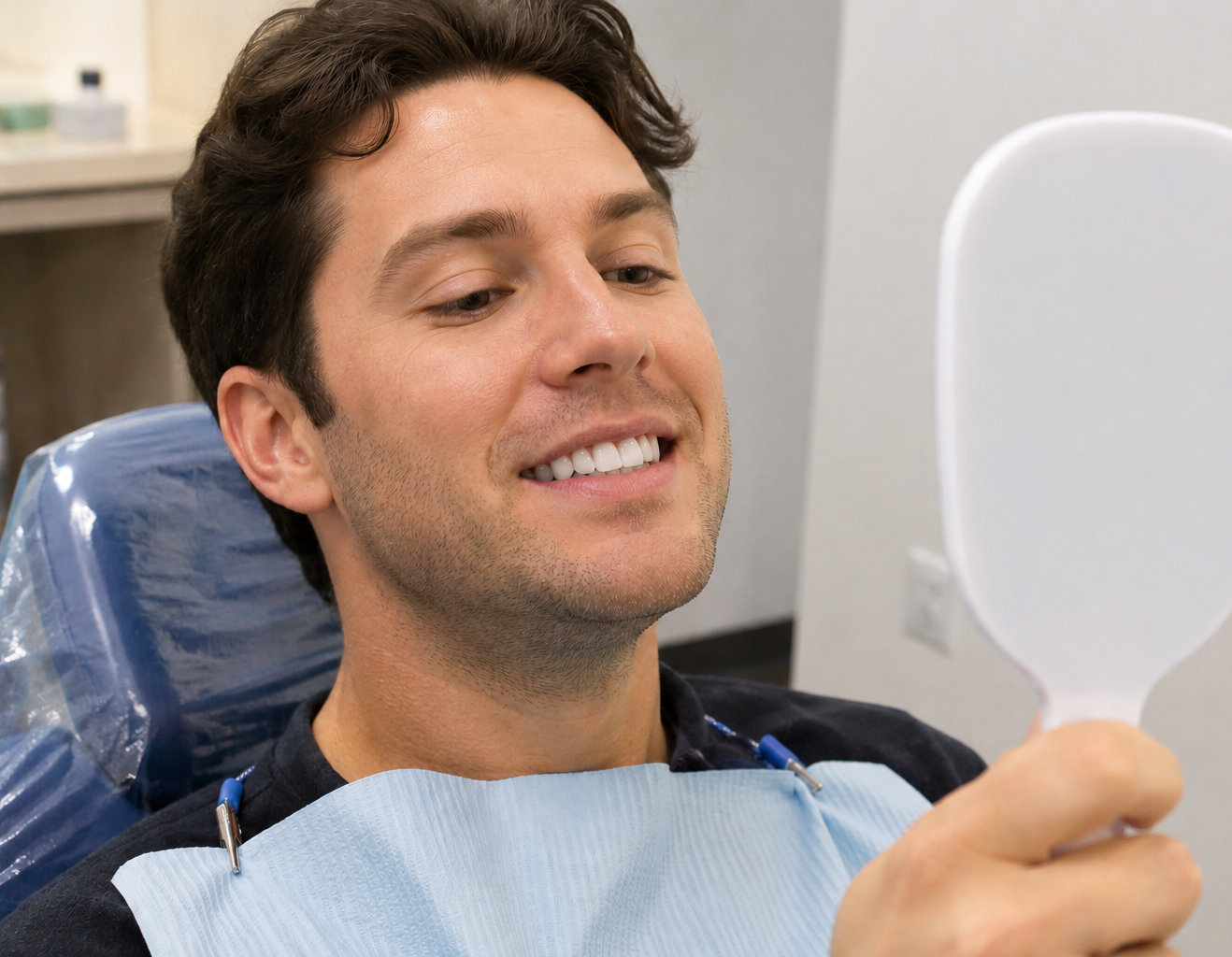
Bonding starts with matching. I hold a shade guide up against your other teeth and pick a composite resin close enough that nobody but you will know which tooth we worked on. That match matters more than people expect. Bonding that is even a shade off stands out under office lighting for years.
Once we have the right shade, I apply the resin directly to the tooth and shape it by hand, filling a chip, closing a gap, covering a stain, whatever brought you in. There is no impression, no lab, and nothing that needs to come back to me in two weeks. It happens right there while you are in the chair.
Once the shape looks right, I harden it with a curing light in a matter of seconds, then polish it until it picks up the same sheen as the enamel around it. Most patients are surprised at how quickly the tooth stops looking like a repair and just goes back to looking like their tooth.
It is not glamorous work, but it is some of the most satisfying. Small fix, real difference, and you walk out looking like yourself, just tidier.
Bonding or Veneers? Here Is How We Decide
Patients ask about this a lot, so let me save you the search. Bonding uses composite resin applied directly to your tooth. It is fast, it does not require removing much, if any, enamel, and it is the more affordable of the two options. It also does not resist staining quite as well as porcelain, so if you are a serious coffee or red wine drinker, that is worth knowing going in.
Veneers are thin shells of porcelain, custom made in a lab and bonded onto the front of your teeth. They tend to hold their color longer and last longer overall, but getting there usually means shaving down a small amount of enamel first, and it takes two visits instead of one.

For a single chipped tooth, a stubborn gap, or a spot of discoloration, I almost always start with bonding. It solves the problem without asking you to give up more tooth structure than the problem requires. If you are looking to change the shape or color of several teeth at once for a more uniform look, veneers usually make more sense, and I will tell you that honestly instead of steering you toward whichever procedure costs more.
Bonded teeth typically hold up for five to ten years before needing a touch-up, depending on how you treat them. Biting into ice, chewing on pens, opening packages with your teeth (you know who you are) will shorten that timeline. Otherwise it is low maintenance. Brush and floss normally, though I will ask you to hold off on whitening trays right after, since bleach reacts differently to resin than it does to enamel.
If you want a plain-language rundown of the procedure, Cleveland Clinic has a solid overview of how dental bonding works and what to expect.
Are You in New York City and Living With a Chip, Gap, or Stain You Would Rather Not Think About?
My team and I have helped patients close gaps, repair chips, and cover stains they had been living with for years, right in our Midtown Manhattan dental office. There is no guilt here, whether you have been putting it off for one year or ten.
Whether your questions are about how bonding compares to veneers, how long the results actually last, or whether your particular chip or gap is even fixable, you will get a real conversation and straight answers. No pressure, no upsell to something you do not need.
You may have just found your new dental home.
Frequently Asked Questions About Dental Bonding
How long does dental bonding take?
Most bonding is completed in a single visit, usually thirty to sixty minutes per tooth depending on how much repair is needed. You leave the same day with the finished result, not a temporary.
What is the difference between bonding and veneers?
Bonding is composite resin applied and shaped directly onto your tooth in one visit, with little to no enamel removal. Veneers are custom porcelain shells made in a lab and bonded on over two visits. Veneers last longer and resist stains better, but bonding is faster, more conservative, and less expensive.
Will dental bonding hurt?
For most patients, no. Bonding usually does not require anesthesia unless we are also treating a cavity or working close to a nerve. You may feel some mild pressure while I shape the material, but it is not painful.
Can bonding fix a tooth I chipped years ago, or does it have to be a recent injury?
Bonding works just as well on an old chip as a fresh one. The timing of the injury does not affect how the resin bonds to your tooth, so there is no reason to have lived with it this long if you would rather not.
It has been a while since I have seen a dentist. Can you still help me with a bonding repair?
Yes, and you will not get a lecture about it in my chair. I will take a look, tell you honestly what is going on, and we will go from there. A gap in dental visits does not usually change whether bonding is the right fix.
For more information on whether porcelain laminate veneers are a good choice for you
call our Manhattan dental practice at 212-685-3040 for a consultation today.