

Bone Grafting in Manhattan
What Is Dental Bone Grafting?
Dental bone grafting is a procedure that rebuilds or strengthens the jawbone, almost always to create a solid foundation for a dental implant. (This is different from bone grafting done elsewhere in the body for orthopedic reasons. Here, we’re talking specifically about the jaw.) It’s most often needed after a tooth has been missing for a while, since the bone tends to shrink without a tooth root to support it. Healing typically takes a few months before the next step can begin..
New Yorkers don’t love sitting still. Between work, the subway, and everything else competing for your time, “I’ll deal with that tooth eventually” can stretch into years pretty easily. I get it. Nobody schedules a dental appointment for fun.
Here’s the thing about that gap, though. The jawbone underneath a missing tooth doesn’t just sit there waiting patiently for you to come back. It actually starts to shrink, sometimes within months. By the time you’re ready to talk about an implant, there may not be quite enough bone left to support one properly. That’s where bone grafting comes in, and it’s a lot more common (and a lot less dramatic) than most people expect.
Quick clarification, since the term gets used a lot in different contexts: when I talk about bone grafting, I mean grafting in the jaw, specifically to prepare for a dental implant. It’s not the same procedure used for, say, a knee or a spine, even though the basic idea (adding material so your body can grow new bone around it) is similar.
I’m in Midtown Manhattan, a few blocks from Grand Central, and I see this situation constantly. Someone comes in ready to finally fix a gap they’ve been living with, and the first conversation we have isn’t about the implant itself. It’s about what the jawbone needs first.
The Procedure That Builds the Foundation for Your Implant
A bone graft adds material to the area where the jawbone has thinned or been lost, giving your body a scaffold to grow new bone around. Depending on your situation, that material might come from a few different sources, and I’ll walk you through exactly what makes sense for your mouth before we do anything.
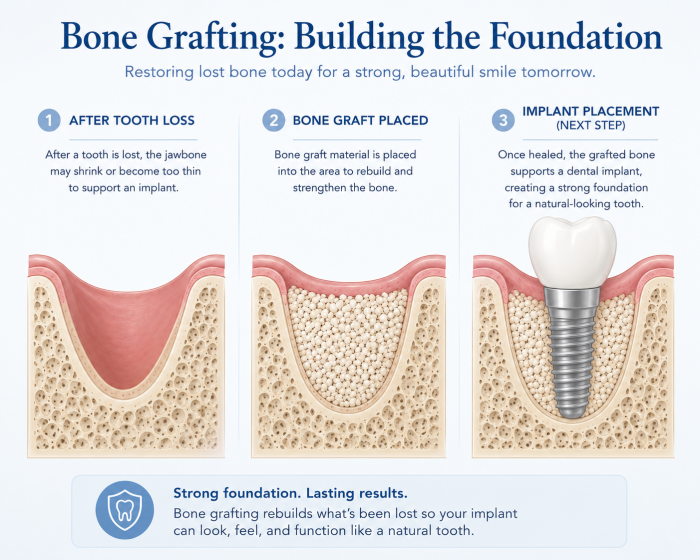
For patients who’ve recently had a tooth removed, we often do socket preservation right at the time of extraction. This fills the empty socket immediately, before the surrounding bone has a chance to collapse inward. It’s a small step that can save a lot of complexity down the road, and it’s specifically about setting up a future implant site, not general bone health.
For patients whose jawbone has already shrunk over time, we’re usually looking at ridge augmentation, which rebuilds the width and height of the bone over a period of months. The American Association of Oral and Maxillofacial Surgeons has helpful information on why this kind of bone loss happens in the jaw and what preserving it means for your long-term oral health.
Either way, the appointment itself is shorter than most people imagine, and the discomfort afterward is usually manageable with over-the-counter medication. The real work happens quietly, over the following months, while your body does what it does best.
Why I Don't Treat This as a Footnote
A lot of offices mention bone grafting almost as an afterthought, something tacked onto the implant conversation at the last minute. I don’t work that way.
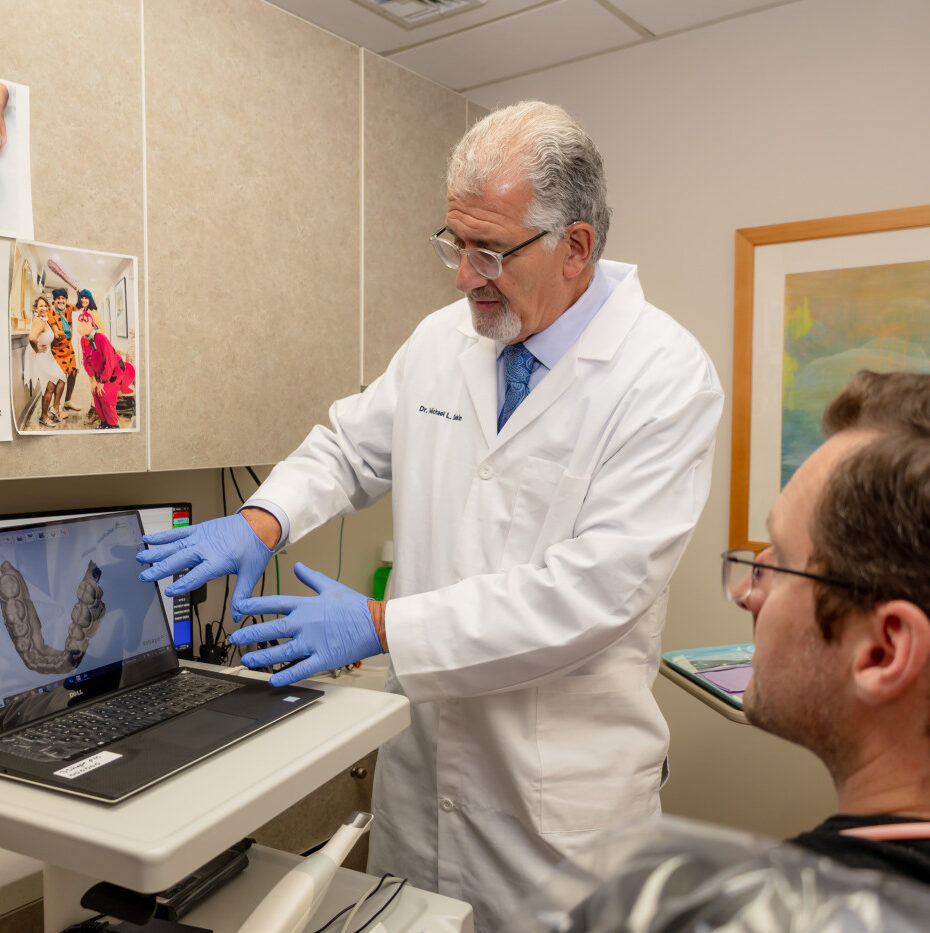
As Surgical Director of NYU College of Dentistry’s implant program, I spend a fair amount of time looking at exactly this question: does this jaw have what it needs to support an implant, and if not, what’s the most conservative way to get it there? That planning happens up front, with imaging and a real conversation, not as a surprise halfway through treatment.
Patients tend to appreciate knowing the full picture before we start. There are no mid-treatment surprises here, just a clear plan from the beginning, focused entirely on getting your implant on solid ground.
Are You in New York City and Worried You’ve Waited Too Long for an Implant?
My team and I have helped patients rebuild jawbone that’s thinned over months or years, right here in our New York City dental office in Midtown Manhattan. If you’ve been putting this off out of embarrassment or worry that you waited too long, that’s a conversation we’ve had many times before, and it’s never a problem.
Whether your questions are about graft materials, how long healing takes, or whether you’re even a candidate for an implant at all, you’ll get a real conversation and straight answers. No guilt, no pressure, just a clear sense of what’s possible.
You may have just found your new dental home.
Frequently Asked Questions About Bone Grafting for Dental Implants
Do I need a bone graft if I want a dental implant?
Not always. Some patients have plenty of healthy jawbone and can move straight to the implant. Others have lost bone density from a missing tooth, gum disease, or denture wear, and need a graft first. The only way to know is with an exam and imaging, which is the first step I’d take with you.
Is this the same as bone grafting done for other parts of the body?
The general concept is similar (adding material so your body can grow new bone around it), but the procedure, materials, and recovery for a dental bone graft are specific to the jaw and to preparing for an implant. If you’ve heard about bone grafting in another medical context, it’s worth setting that aside. This is a much smaller, more contained procedure.
What’s the difference between a bone graft and a sinus lift?
A bone graft rebuilds bone in the jaw itself. A sinus lift is a specific type of graft used for upper back teeth, where the sinus sits close to the jawbone and needs to be gently raised to make room for new bone. Both serve the same goal, which is creating enough solid foundation for an implant.
Is a bone graft painful?
Most patients describe it as similar to having a tooth extracted, with some swelling and tenderness for a few days afterward. We use anesthesia during the procedure and I’ll give you clear guidance for managing comfort at home. Patients are usually surprised by how manageable it is.
It’s been years since I lost the tooth. Is it too late?
No. This is one of the most common things I hear, usually with a bit of guilt attached, and there’s no need for that. Jawbone loss that’s happened over years can almost always be addressed with grafting before placing an implant. It might mean an extra step or two in the process, but “too late” is rarely the right way to think about it.
Call my Manhattan dental practice
at 212-685-3040 to schedule your root canal procedure consultation.