
“Is it too late to fix my teeth?” It’s a question I’ve been asked many times over the forty-plus years I’ve been practicing dentistry. Generally speaking, there are two different types of people who most often ponder this question.
The first is someone who has avoided dental care for years, sometimes decades, and is finally ready to get serious about their dental condition. The second has been to the dentist regularly, done everything asked of them, and is still watching their teeth fail.
What follows is my attempt to answer anyone asking what can be done – if anything – to fix their teeth. And when people ask that, what they really mean is: what can be done to fix their mouth.
This article is written specifically for people facing serious, extensive dental problems. Not a cavity or two. We’re talking about multiple missing teeth, widespread bone loss, bridgework or crowns that keep failing, or a dentist who has suggested that full dentures may be the next step. If that is where you are, this is for you.
And the answer, in almost every case, is: no, it is not too late to fix your teeth. Here’s what that actually looks like.
Quick Answer
It is almost never too late to fix your teeth, even when the damage is extensive. Patients with significant bone loss, multiple missing teeth, decades of failing dental work, or a recommendation for full dentures often have more options than they realize. Full mouth reconstruction, built around a personalized treatment plan, can restore a functional, healthy mouth. The conversation is worth having.
Two Paths to the Same Moment

Some patients asking this question have been going to the dentist twice a year for their entire adult lives. They’ve followed every recommendation. They did the root canals. They had the crowns placed and replaced. And they are still losing ground.
That is not failure. Dental health can be significantly shaped by factors outside your control. Bone density, the composition of your saliva, how your bite distributes force across your teeth, and plain genetics all play a role that no amount of diligent home care can fully override. And dental work has a lifespan. Crowns and bridges placed twenty or thirty years ago were not designed to last forever. Neither are your own teeth, under some conditions.
Other patients have avoided the dentist for years, for reasons that made sense at the time: fear, a traumatic experience, financial constraints, or a stretch of life when care wasn’t accessible. It’s a different path to the same place.
The question is not what went wrong or whose fault it is. The question is what comes next.
Note: The structural integrity of your mouth is partly inherited. You didn’t choose your bone density. You didn’t choose your saliva chemistry. Doing everything right sometimes isn’t enough to outrun what you were born with.
What's Actually Possible When Damage Is Extensive
For a long time, patients with severely compromised mouths were told that dentures were the practical endpoint. The assumption was that comprehensive reconstruction was too complicated, too specialized, or simply not on the table. That assumption was frequently wrong, and the options available today are meaningfully different from what existed even a generation ago.
If Dentures Have Been Mentioned
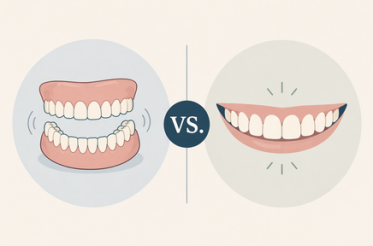
If your dentist has recommended full dentures as the next step, that conversation is worth revisiting with a second opinion, specifically from a dentist who does this type of work regularly.
Full mouth reconstruction requires a particular combination of surgical training, restorative experience, and the ability to manage complex, multi-stage cases. Not every practice focuses on this, and that’s not a criticism. It simply means that a recommendation for dentures may reflect what’s available within a specific practice rather than what’s possible overall. Many patients who were told dentures were next have found, with a second look, that they had more options than they knew.
What Full Mouth Reconstruction Actually Involves
A full mouth reconstruction is a coordinated approach to rebuild a severely compromised mouth. It draws on a combination of treatments: dental implants to replace missing teeth, crowns and bridges to restore damaged ones, and periodontal treatment to address the gum and bone foundation. The exact combination depends entirely on what’s actually there and what the realistic goals are.
What it is not is a single procedure or a fixed protocol. Every plan is built from scratch, based on the individual situation, and designed around what will hold up for the long term. The goal at the end is a functional, healthy mouth that you can maintain, not a temporary solution that creates the next round of problems.
Note: A full mouth reconstruction is not a weekend project. Neither is restoring a pre-war apartment. Both take longer than you’d expect, require people with very specific skills, and look remarkably good when they’re done.
How Treatment Gets Sequenced Over Time
This is the part most patients don’t know going in: a full mouth reconstruction unfolds in stages, and that is by design. Each step needs time to heal and stabilize before the next one begins. Bone needs to integrate. Tissue needs to recover. The foundation has to be solid before anything is built on top of it.
The sequenced approach also means you and your dentist can see and evaluate the results as you go. You’re not committing to everything at once and hoping it works out. You know what’s coming at each stage, and your plan adjusts to how your body responds. A treatment that unfolds over time is not a compromise. It is how this work is supposed to be done.
What You Can Do Right Now
- Get a comprehensive evaluation. Not just a cleaning. A full examination with x-rays that gives you a complete picture of what’s there and what your realistic options are.
- Ask about full mouth reconstruction specifically. If you have been told that dentures are the next step, ask whether reconstruction has been considered. If the answer is no, a second opinion is worth pursuing.
- Tell the dentist and staff about your anxiety. If fear has been part of your history with dental care, say so. A good practice adjusts how they work with you. That’s not a special accommodation; it’s just how good care is delivered.
- Ask for a treatment sequence. If the scope of what needs doing feels overwhelming, ask the dentist to walk you through the order of treatment. A logical plan, laid out clearly, makes even a significant process feel manageable.
- Know that a path forward almost certainly exists. Patients who ask whether it is too late to fix their teeth, even patients with years of serious damage, almost always find that it isn’t.
Final Thoughts
I’ve been practicing dentistry in midtown Manhattan for over forty years. Many patients who have stayed with us the longest are the ones who came in at the most difficult moment – convinced there was nothing to be done, or carrying a recommendation for dentures they didn’t want to accept. In many of those cases, there was another path.
What four decades in this work tells me is this: it is almost never too late. The process takes time and the result is a functional and good-looking mouth you can maintain for the rest of your life. If you’ve read this far and you’re wondering whether that conversation applies to you, I’d encourage you to find out.
For New Yorkers Looking for a Dentist They Can Trust
If you are in New York City and wondering whether it is too late to fix your teeth, I’d like to give you an honest answer in person.
Whether you’re dealing with years of serious dental problems, old work that has run its course, or a recommendation for dentures you’re not ready to accept, my team and I will give you the full picture. Clearly, compassionately, and without judgment. Call us at 212-685-4030.
You may have just found your new dental home.
Frequently Asked Questions: Is It Too Late to Fix My Teeth?
1. Is it too late to fix my teeth if the damage is extensive?
No. Extensive damage, including significant bone loss, multiple missing teeth, or decades of failing dental work, does not mean reconstruction is off the table. A comprehensive evaluation is the only way to know what options are realistically available.
2. My dentist has recommended full dentures. Should I get a second opinion?
Yes. Full mouth reconstruction requires a specific combination of surgical training and restorative experience that not every practice focuses on. A consultation with a dentist who specializes in this work can tell you clearly whether reconstruction is a realistic alternative.
3. Is full mouth reconstruction a real alternative to dentures?
Yes, for many patients it is. Full mouth reconstruction preserves or replaces teeth using implants, crowns, and other restorative treatments, resulting in a fixed, functional mouth rather than a removable appliance. It requires more planning and time but produces results that feel and function like natural teeth.
4. Can your teeth still fail even if you have been going to the dentist regularly?
Yes. Dental health is significantly shaped by genetics, bone density, saliva composition, and bite mechanics, factors that regular care cannot fully override. Consistent treatment helps, but it does not eliminate risk for everyone equally.
5. Does full mouth reconstruction take a long time?
Yes, and that is intentional. Full mouth reconstruction is completed in stages, with healing and stabilization built into the sequence. The timeline varies by case, but a well-sequenced plan that unfolds over time is what produces lasting results.
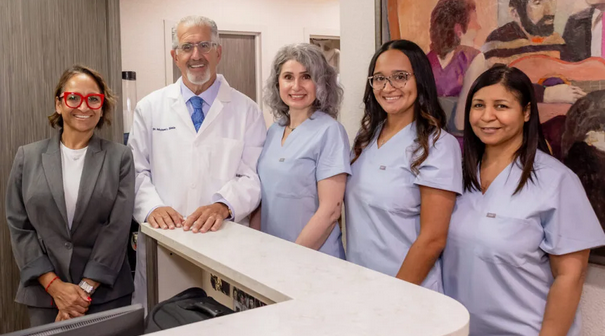
Dr. Michael Sinkin is a general and implant dentist in Midtown Manhattan with over 40 years in practice. He holds a Master of the Academy of General Dentistry (MAGD), a credential earned by fewer than 6% of dentists in the United States, and serves as Surgical Director of NYU College of Dentistry’s Continuing Education Implant Program. He has built his practice around one principle: exceptional dental care with a heart. Patients come to him from across New York City, the surrounding area, and beyond.