Quick Answer
Yes, wine can stain teeth. Red wine contains chromogens (intensely pigmented compounds) and tannins that bind to tooth enamel, leaving behind visible discoloration. White wine lacks those pigments but is typically more acidic, which softens enamel and makes it more vulnerable to staining from other foods and drinks. With moderate, mealtime consumption, neither poses a serious risk of structural damage. Chronic, prolonged exposure to wine’s acidity is a different matter, and worth understanding.
Every few months, someone settles into my chair to discuss whitening their teeth, and invariably the topic of whether wine will stain their teeth. In the words of Billy Joel, “A bottle of white, a bottle of red. Perhaps a bottle of rosé instead.” What he did not cover is what each does to your teeth. I have been practicing in Midtown Manhattan for over forty years. My patients drink wine. This is not a surprise to anyone, least of all me. and yes, I have observed the dulling effects of fermented wine on teeth color and texture.
The question usually comes after a cleaning, when the polishing is done and the teeth look a bit brighter. “Is the wine doing this?” they ask. Sometimes they gesture at their teeth. Sometimes they gesture at the ceiling, and sometimes they just shrug in acknowledgement of their affinity to red, white or rosé. Wine consumption most definitely can stain teeth, but not all wines are created equal and the extent of the teeth staining depends on which wine, how much, and how you drink it.
Here is what actually happens when wine meets enamel, and what you can do about it without giving up anything you actually enjoy.
Why Red Wine Stains Teeth
The science here is well established, and it comes down to three things working in combination: chromogens, tannins, and acidity.
Chromogens are intensely pigmented molecules. They are responsible for the deep color in red wine, coffee, tea, and dark berries. In the mouth, they do not bond directly to bare enamel. They attach to something called the acquired pellicle, a thin protein film that forms on the surface of your teeth within minutes of brushing. The pellicle has a protective role, but it also gives chromogens a surface to grip.
Tannins are polyphenols that give red wine its characteristic dry, gripping texture. In the mouth, they act as an adhesive. They help chromogens bind more firmly to the pellicle, and ultimately to the enamel beneath it. This is a significant part of why red wine stains more persistently than, say, grape juice: the tannin content is considerably higher.
Acidity is the third factor. Most red wines sit at a pH between 3.3 and 3.7, which is meaningfully acidic. That acidity temporarily softens the enamel surface, making it slightly rougher and more porous. A rougher surface holds stain more readily, the same way a scratched countertop picks up color differently than a polished one.
Note: Under a microscope, your enamel looks something like a honeycomb. Acid opens those cells up slightly. Chromogens move right in. Tannins make sure they stay. It is an efficient little system, and none of it is working in your favor.
What About White Wine?
Here is the part that surprises most people: white wine can make staining worse! Despite the fact that it contains essentially no visible pigment of its own.
White wine is typically more acidic than red. It softens enamel just as effectively, sometimes more so, but without depositing chromogens of its own. What this means in practice: if you have a glass of white wine with dinner and then follow it with tomato sauce, coffee, or berries, your enamel is already softened and slightly more porous. It is primed to absorb whatever color comes next.
Note: White wine is less an accomplice and more a door held open for something else. It may not have done the staining, but it makes things considerably easier for whatever comes after.
The practical upshot: white wine drinkers are not in the clear. The staining mechanism is different, but the risk is real.
Can Wine Damage Your Teeth, In Addition To Staining Them?
Staining and structural damage are two different things, and it is worth separating them.
Staining is what most people mean when they ask this question. It is extrinsic discoloration on the outside of the tooth. Much of it can be removed or significantly reduced with professional cleaning, polishing, and, when staining has become embedded, professional whitening treatment.
Enamel erosion is different. It is a structural change, not a surface one. Research documented in the dental literature has found that wine’s acidity can cause significant erosive loss of tooth structure, particularly in patients who sip wine slowly over extended periods rather than consuming it with a meal.
For moderate, mealtime wine consumption, the risk of meaningful erosion is relatively low. Saliva does significant buffering work between sips. But if you have dry mouth, acid reflux, or habitually sip wine over several hours, the cumulative effect on enamel is worth taking seriously.
Not to mention, if you tend to swill and swish wine before swallowing, you increase the potential damage caused by wine because of the increased exposure time of the “acid wash.”
Note: Saliva is one of the great unsung heroes of dental health. It buffers acid, washes away chromogens before they have time to settle, and actively works to remineralize softened enamel after an acid challenge. Anything that reduces saliva flow, including certain medications, changes this calculation considerably.
What You Can Actually Do About It
None of this requires giving up wine. It requires a few habits:
- Rinse with water while you drink. A few sips of water during and after wine dilutes acidity and washes away surface chromogens before they settle. Still water works fine.
- Wait before brushing. Give your enamel at least thirty minutes after wine before brushing. Brushing on freshly acidified enamel removes surface structure more aggressively than it should.
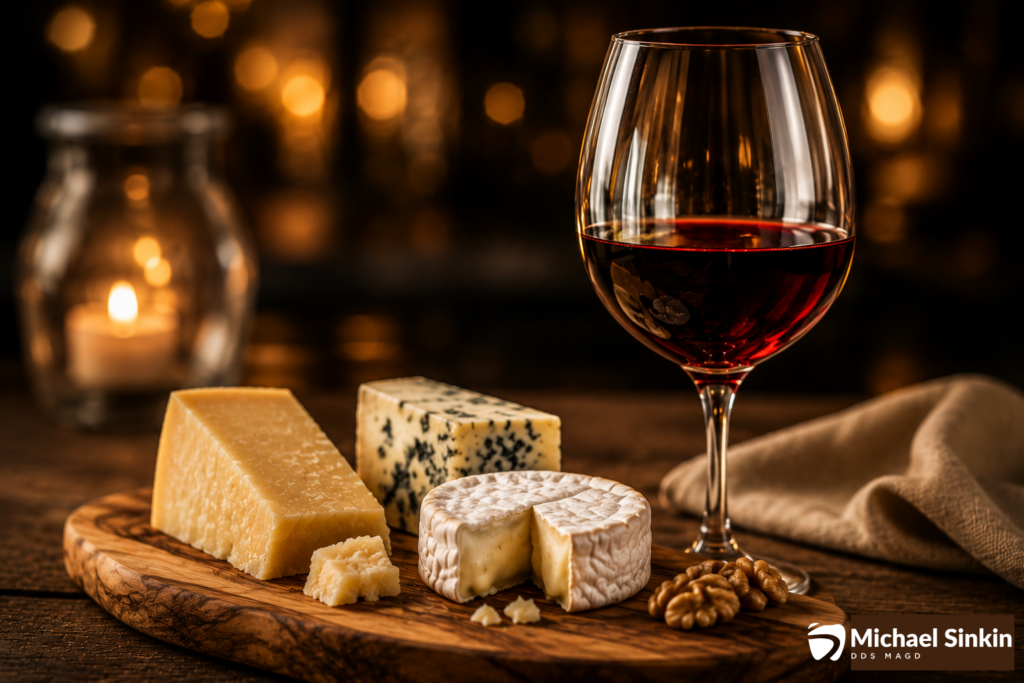
- Eat while you drink. Cheese in particular has alkaline properties that help buffer acidity. There is a reason wine and cheese appear together throughout human history. Your enamel approves of this tradition.
- Keep up with professional cleanings. Surface staining from wine responds well to professional polishing. Much of the discoloration patients attribute to wine simply goes away at the cleaning appointment.
- Ask about whitening if staining persists. Professional whitening addresses discoloration that has become embedded in enamel, not just surface staining. If your teeth look different even after a cleaning, that is worth a conversation.
- Tell your dentist about your wine consumption. Enamel erosion from acidity is typically caught early on a routine exam, long before it becomes a structural problem. Your dentist cannot monitor what they do not know about.
Final Thoughts
Patients often preface the wine question with an apology. “I know, I know.” As though I am about to make them feel guilty. Forty years of practice has taught me that moderate wine drinking is not the dental crisis many people assume it is. What causes real trouble is the pattern around it: sipping for hours without eating, going years between cleanings, and never rinsing.
The patients I genuinely worry about are the ones who never ask. If you are curious enough to want to know what wine staining does to your teeth, you are already the kind of patient who is paying attention. That matters more than the wine does. If it has been a while since you have had a cleaning, now’s the time.
For New Yorkers Looking for a Dentist They Can Trust
If you are in New York City and looking for a dentist who will give you straight answers without a lecture, my team and I would be glad to meet you. Visit us at our Midtown Manhattan dental office for an experience built on clarity, warmth, and genuine care. Whether you have questions about wine and tooth staining, teeth whitening, or anything else on your mind, you will leave with real information and a plan. You may have just found your new dental home. Call us today to book your appointment, we look forward to meeting you! Meet Dr. Sinkin | Meet The Staff | Patient Reviews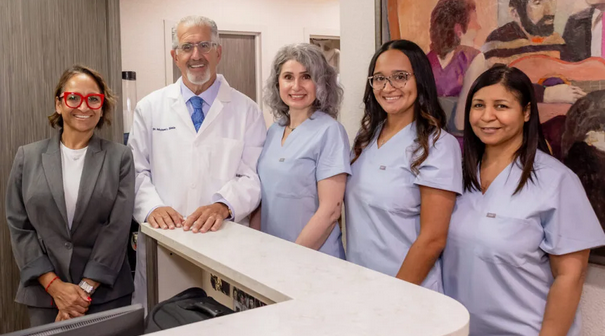
Frequently Asked Questions: Does Wine Stain Teeth?
1. Does red wine stain teeth permanently?
No, not typically. Red wine staining is usually extrinsic discoloration, meaning it lives on the outer surface of the enamel rather than inside the tooth structure. Most surface wine stains can be removed or significantly reduced with professional cleaning and polishing. Staining that has become more embedded in enamel generally responds well to professional whitening treatment.
2. Is white wine better for my teeth than red wine?
Not necessarily. White wine lacks the chromogens that cause visible staining in red wine, but it is typically more acidic, which softens enamel and makes it more susceptible to staining from other foods and drinks consumed around the same time. White wine is not a safer choice for your teeth; it creates a different kind of problem.
3. Can wine actually damage tooth enamel, not just stain it?
Yes, with prolonged or heavy exposure. Wine’s acidity can cause enamel erosion over time, particularly for people who sip wine slowly over extended periods, have dry mouth, or drink on an empty stomach. With moderate, mealtime consumption, the erosion risk is considerably lower, as saliva actively buffers acidity between sips.
4. What is the best way to prevent wine from staining my teeth?
Rinse with water during and after drinking, eat food alongside your wine (cheese is especially helpful for buffering acidity), and wait at least thirty minutes before brushing. Keeping up with regular professional cleanings is the single most effective step you can take to manage surface staining before it becomes embedded in enamel.
5. I’m in New York City and my teeth look discolored. Could wine be the cause?
Possibly, though tooth discoloration has several causes worth evaluating. Surface staining from wine, coffee, and tea is common and typically responds to professional cleaning. If the discoloration is deeper or does not resolve after a cleaning, whitening or a more thorough evaluation may be the right next step. A Midtown Manhattan dentist can assess what you are actually seeing and recommend accordingly.
While You're Here...
About Dr. Sinkin
Dr. Michael Sinkin is a general and implant dentist in Midtown Manhattan with over 40 years in practice and a Surgical Director at NYU College of Dentistry’s Continuing Education Implant Program. He has built his practice around one idea: exceptional dental care with a heart.