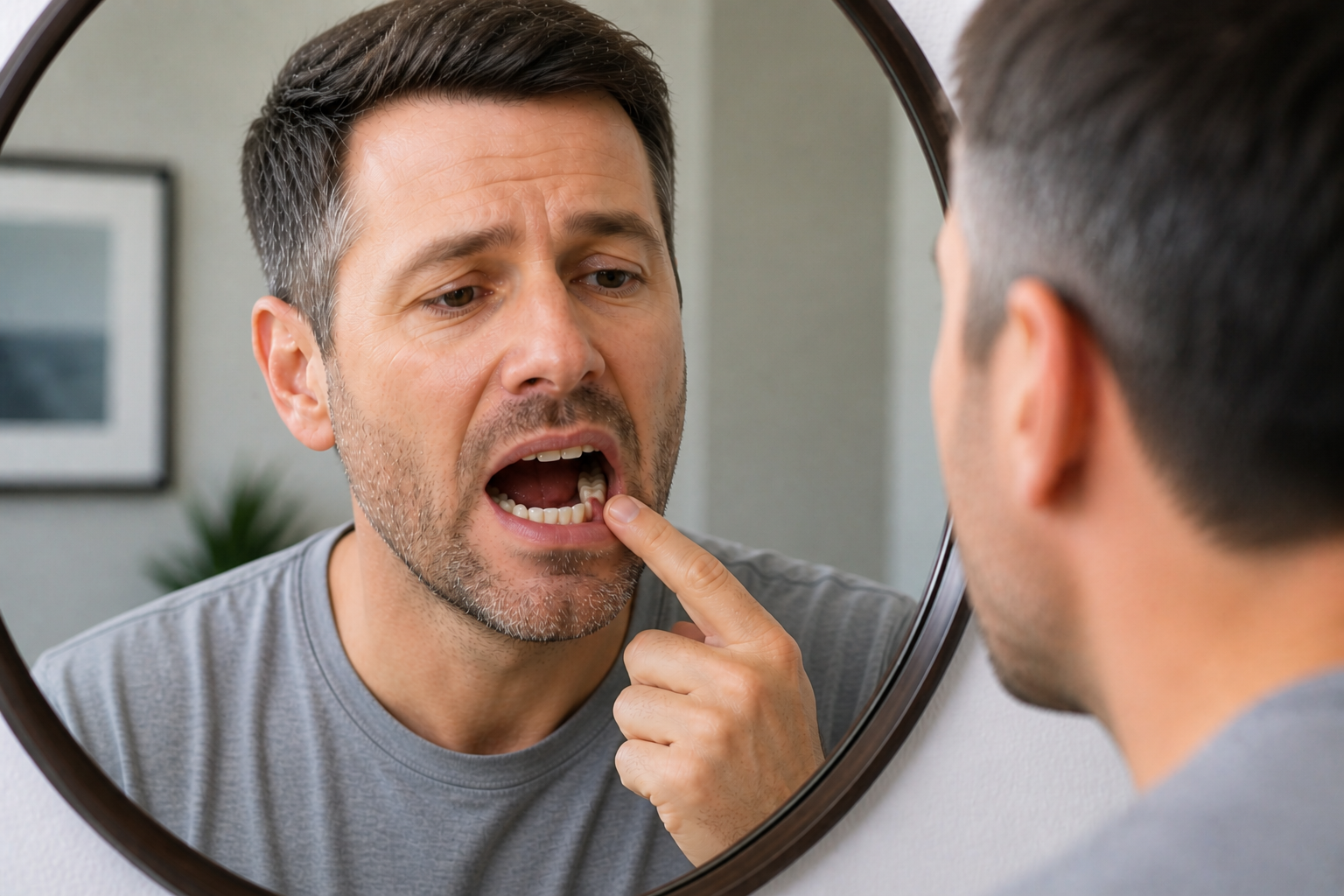
Quick Answer
A missing tooth quietly causes bone loss, shifting teeth, and bite problems long before anything hurts. The sooner you replace it, the more options you have.
A patient came in not long ago who had been living with a missing tooth for three years. Not a visible one, he pointed out. Nobody could see it, so he’d never gotten around to replacing it. By the time I took the X-ray, the bone beneath the gap had already started to shrink, the tooth next to it had tilted into the space, and the tooth above it had started to drift down, looking for something to bite against.
Three years of ‘nobody can see it,’ and his mouth had been quietly remodeling itself without his permission. A missing tooth isn’t just a cosmetic gap. It’s a structural problem, and it’s worth understanding what’s actually happening beneath the surface.
What a Missing Tooth Does to the Rest of Your Mouth
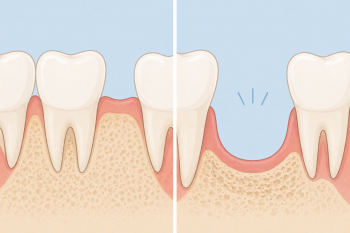
Your bone starts to disappear
The most significant consequence is one you can’t feel: bone loss. The jawbone beneath a tooth stays dense because the tooth root transmits biting pressure into the bone, signaling it to maintain itself. Remove that signal and the body begins to resorb the bone, treating it as unnecessary material.
According to the American Academy of Periodontology, this process begins within the first year after tooth loss and continues over time. The more bone that disappears, the more complicated any future replacement becomes.
Note: Your jawbone operates on a strict use-it-or-lose-it policy. It’s not being unreasonable. It’s just very literal about job descriptions.
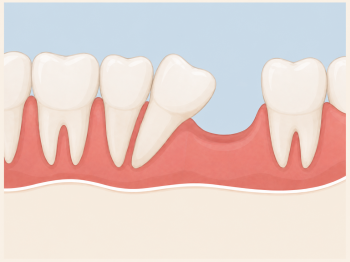
Your neighboring teeth drift
Teeth rely on each other for position and support. When one disappears, the neighbors notice. The teeth on either side tilt toward the gap. The tooth above or below the space begins to erupt into it, looking for contact it no longer has. Over time, this shifts how your teeth meet when you bite, and that affects far more than the one missing spot.
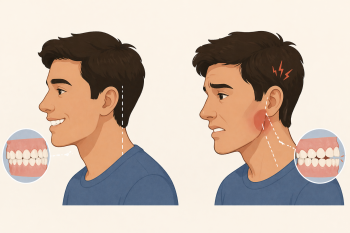
Your bite shifts, and your jaw follows
A changed bite doesn’t stay localized. When teeth no longer meet properly, your jaw joint (the TMJ) compensates. Over years, that compensation can contribute to jaw soreness, headaches, and uneven wear on the teeth you still have. What began as one missing tooth becomes a cascading series of structural changes, none of which announce themselves with pain until they’re well underway.
Your Options for Replacing a Missing Tooth
The best option depends on which tooth is missing, how much bone remains, and your overall health. Here’s an honest look at what’s available.
Dental implant
A dental implant is a titanium post placed into the jawbone, topped with a crown that looks and functions like a natural tooth.
Pros: Stimulates the bone directly, preventing further loss. Doesn’t require altering neighboring teeth. Functions and looks like a natural tooth. Long-lasting with proper care.
Cons: Requires surgery and a healing period. Needs sufficient bone volume. Not appropriate for every patient.
Fixed dental bridge
A fixed bridge spans the gap by anchoring a replacement tooth to the two healthy teeth on either side. It stays permanently in place.
Pros: No surgery. Faster than an implant. Fixed and stable.
Cons: Requires reducing healthy neighboring teeth. Doesn’t address bone loss beneath the gap. May need replacement over time.
Removable partial denture
A removable partial denture clips onto remaining teeth and fills in the space. It’s typically the lowest-commitment starting point.
Pros: No surgery. Quick to make. Lower upfront commitment.
Cons: Less stable than fixed options. Can feel bulky. Doesn’t address bone loss.
Note: I want to be fair to all three. Each has a genuine place depending on the situation. But if you’re asking me which one holds up best over the long run for the right candidate, implants win that conversation.
What You Should Do Now
- Get an X-ray. Even if you feel fine, imaging will show how much bone remains and whether any shifting has already begun. What’s invisible to you is very visible on film.
- Don’t wait for symptoms. Bone loss and tooth movement are painless for a long time. By the time something hurts, you’ve often already lost options.
- Ask about timing. Acting within the first year after tooth loss preserves the most bone and keeps your options open. Later isn’t too late, but earlier is nearly always better.
- Get a real evaluation. A proper assessment is worth more than any general guide. Not every option works for every situation, and the right answer for you may be different from what a neighbor or a web search suggests.
Final Thoughts
A missing tooth is one of those problems that’s easy to defer because it doesn’t hurt and, often, nobody can see it. But the structural changes beneath the surface don’t wait. The options for replacing missing teeth today are genuinely excellent. We have solutions that look natural, function naturally, and with proper care can last for decades. The question is just whether you act before the problem gets more complicated.
If you’ve been living with a gap, whether it’s been six months or several years, come in and let’s take a clear-eyed look at where things stand. There’s no pressure and no guesswork. Just an honest answer about what your options are and what I’d actually recommend.
For New Yorkers Looking for a Dentist They Can Trust
If you are in New York City and looking for a dentist who takes the time to listen, explain, and treat you like family, my team and I would be honored to meet you.
Visit us at our New York City dental office in Midtown Manhattan for an experience built on clarity, compassion, and genuine connection. Whether you have questions about replacing a missing tooth, dental implants, or anything else, you’ll get straight answers and the time you deserve.
You may have just found your new dental home.
Frequently Asked Questions: Replacing a Missing Tooth
1. What actually happens if you don’t replace a missing tooth?
When you leave a missing tooth untreated, the jawbone beneath the gap begins to shrink, neighboring teeth tilt toward the space, and the opposing tooth starts to drift. None of these changes announce themselves with pain, which is exactly why people miss them. Over time, they affect your bite, your jaw, and your options for treatment.
2. How soon should you replace a missing tooth?
Sooner is better. Bone loss begins within the first year after a tooth is lost, and it continues the longer the gap remains. Acting earlier means more bone to work with, more options available, and typically a simpler process. That said, it is rarely too late to do something. A proper evaluation will tell you exactly where things stand.
3. Is it okay to skip replacing a back tooth nobody can see?
This is the most common reason patients wait, and I understand the logic. But the consequences of not replacing a missing tooth apply equally to back teeth. Back teeth handle the bulk of your chewing load, so bone loss, drifting, and bite changes happen there too, and they affect the rest of your mouth just as much. ‘Nobody can see it’ tends to cost more to fix later.
4. What is the best way to replace a missing tooth?
For most patients who qualify, a dental implant is the most complete solution because it replaces the root, prevents bone loss, and leaves neighboring teeth untouched. That said, a fixed bridge or removable partial denture may be a better fit depending on bone volume, health, and which tooth was lost. The honest answer is: it depends on you specifically.
5. Should I tell my dentist about a tooth I lost years ago?
Absolutely, and if you haven’t seen a dentist recently, now is a good time to come in. A tooth lost years ago may have already caused bone loss or shifting you’re not aware of. Knowing where things stand gives us a baseline and helps determine what your options are. It’s never about the past. It’s always about what we can do going forward.
Dig a little deeper…
Dental Implants in Midtown Manhattan – A look at how implants work, who is a candidate, and what the process involves.
Why Patients Choose Dr. Sinkin – What sets our practice apart from the rest.
General Dentistry in Midtown Manhattan – Restorative options and the value of having a true dental home.
Dr. Michael Sinkin is a general and implant dentist in Midtown Manhattan with over 40 years in practice. He holds a Master of the Academy of General Dentistry (MAGD), a credential earned by fewer than 6% of dentists in the United States, and serves as Surgical Director of NYU College of Dentistry’s Continuing Education Implant Program. He has built his practice around one principle: exceptional dental care with a heart. Patients come to him from across New York City, the surrounding area, and beyond.